
Gynaecological Treatment in India

Specialist treatment for fibroids, endometriosis, adenomyosis, hysterectomy, prolapse and related conditions.
Gynaecological conditions can affect periods, pelvic health, fertility and everyday life. Treatment depends on your condition, symptoms, medical history and whether you plan to have children in the future.
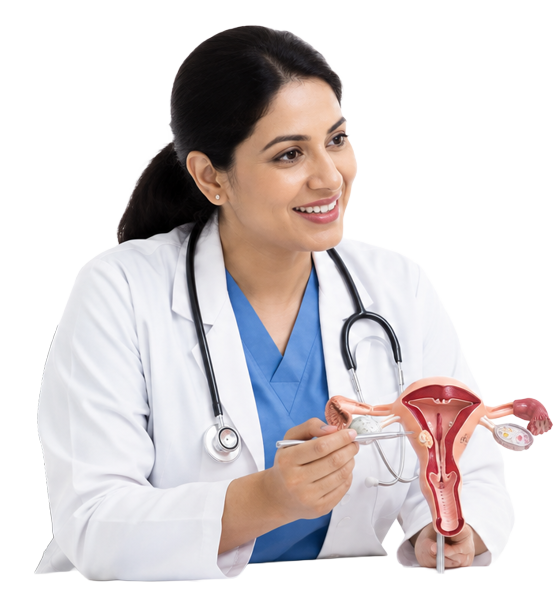
Who May Need Treatment?
When Should You Consider Gynaecological Treatment? You may need treatment if you have:
- Heavy or painful periods
- Endometriosis
- Persistent pelvic pain
- Pelvic organ prolapse
- Fibroids or adenomyosis
- Stress urinary incontinence
- Symptoms that are affecting your daily life or fertility
The right treatment depends on what is causing your symptoms and the findings from your medical evaluation.
Conditions and Treatment Options
Common Gynaecological Conditions
Fibroids
Treatment may include hysteroscopic myomectomy, laparoscopic or open myomectomy, uterine artery embolisation or hysterectomy. Myomectomy preserves the uterus and may be considered when future pregnancy is important.
Endometriosis and adenomyosis
Endometriosis can be treated with keyhole excision, including complex disease involving the bowel, bladder or ureters. Complex cases may require a multidisciplinary team.
Hysterectomy
Hysterectomy may be performed vaginally, laparoscopically, robotically or through an open abdominal approach. The choice depends on the condition and what is safest for the patient.
Prolapse and bladder problems
Treatment may include surgery for pelvic organ prolapse and stress urinary incontinence.



Why India?
Indian hospitals offer minimally invasive and robotic gynaecological surgery. Large centres can also bring gynaecologists, colorectal surgeons and urologists together for complex endometriosis cases involving the bowel, bladder or ureters.
Recovery and What to Expect
- Keyhole or robotic hysterectomy may require 1 to 3 days in hospital.
- Open hysterectomy may require 4 to 6 days.
- Myomectomy may require 2 to 4 days, while hysteroscopic procedures are often day cases.
- Prolapse repair may require around 2 to 4 days.
- Keyhole & vaginal procedures generally allow a shorter recovery than open surgery.
- Pelvic surgery can increase blood-clot risk. Your surgeon should confirm when you are fit to fly.
Top Hospitals for Gynaecological Treatment
Look for experience with the specific procedure, minimally invasive or robotic capability, access to other specialists for complex cases, on-site pathology and appropriate accreditation. For deep endometriosis, confirm bowel and urology support is available when required.
Max Super Speciality Hospital, Saket
New Delhi
Apollo Hospital Greams Lane | Best Hospital in Chennai
Chennai
Fortis Hospital Gurgaon - Best Hospital in Gurugram
Gurugram
Frequently Asked Questions
Can I have children after gynaecological treatment?
Depends on the procedure. Myomectomy, endometriosis excision and ovarian cystectomy are all designed to protect fertility. Hysterectomy ends it permanently. Tell your surgeon you want children before the plan is made. It often changes what gets recommended.
Will a hysterectomy cause menopause?
Only if your ovaries come out too. Without the uterus your periods stop, but the ovaries keep making hormones and menopause does not start. Ask specifically whether your ovaries are being kept.
Can fibroids come back after myomectomy?
Yes. Surgery removes what is there, but new fibroids can grow. The risk is higher if you had several, or if you are young. Hysterectomy is the only permanent answer.
Can endometriosis return after surgery?
It can. Endometriosis is a long term condition, not a one off problem. Complete excision by an experienced surgeon lowers the risk. Hormonal treatment afterwards helps keep it away.
Is robotic surgery always better than standard keyhole surgery?
No. For straightforward cases the results are much the same. Robotic helps in deep pelvic work and complex disease. Your surgeon's experience matters more than the machine, and robotic costs more.

Share your scans and reports to explore your gynaecological treatment options in India.
Share Your Medical ReportsThis page is for general information only. Gynaecological treatment decisions should be made with a qualified specialist who has reviewed your case and examined you.